AI Study and Academic Integrity: How to Get Help Without Cheating
Using an AI study assistant to understand a topic is not cheating — submitting AI-written work as your own is. The line between the two is clearer than it first looks, and it is the difference between learning and academic misconduct.
This guide draws that line with concrete examples, explains when you have to disclose your AI use, and shows how to study with AI in a way any honor code would allow.
Is Using AI to Study Cheating? It Depends on What You Do With It
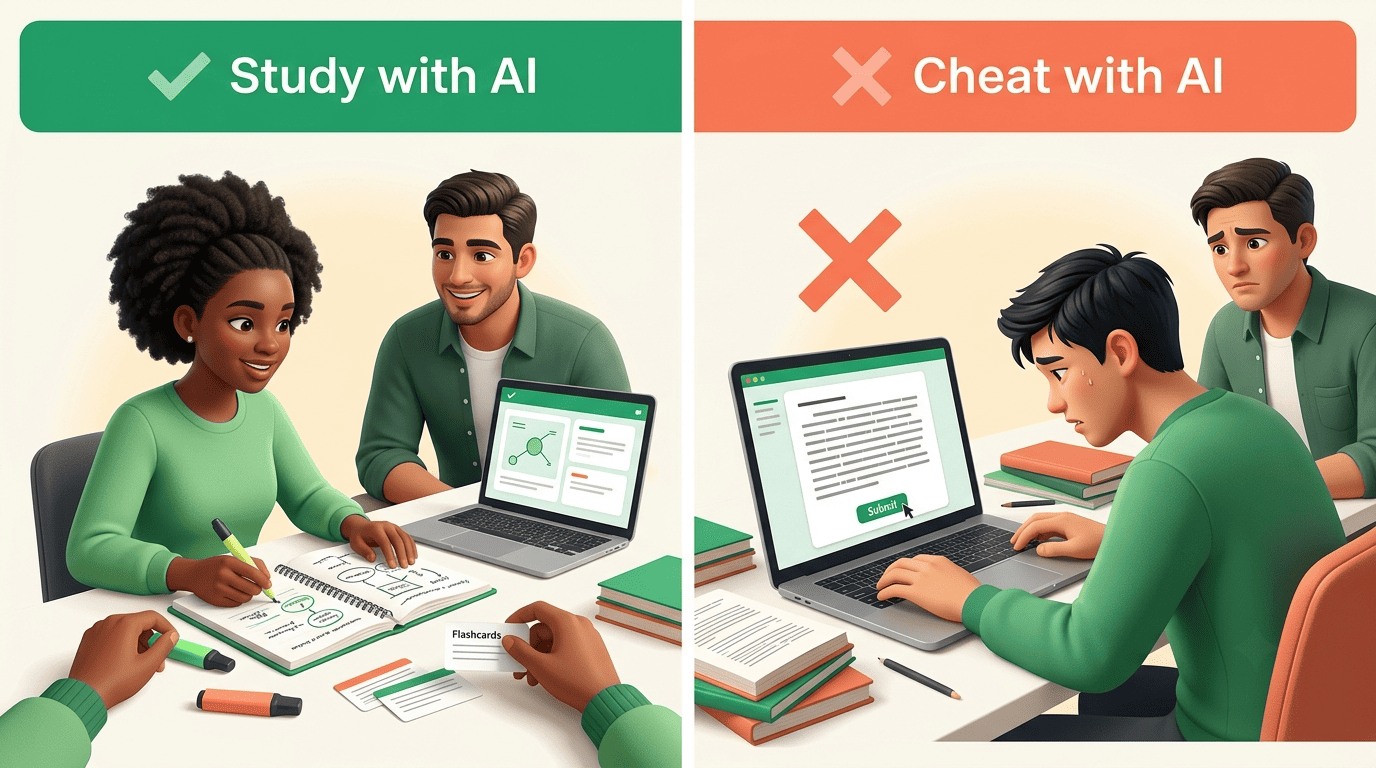
The same tool can be a study aid or a cheating device depending entirely on how you use it. The deciding factor is whether it builds your understanding or replaces it.
Learning with AI vs. submitting AI’s work
Using AI for studying — asking it to explain a concept, quiz you, summarize a reading, or check your reasoning — is legitimate. Submitting AI-generated essays, answers, or code as your own is plagiarism. The American Psychological Association frames academic integrity as fundamentally a teaching-and-learning issue: the point is your mastery, and generative AI is fine when it builds that mastery, not when it stands in for it.
That framing is useful because it moves the question from “what can I get away with” to “did I actually learn this.” If you could not reproduce the work without the tool, you have not learned it yet.
You are responsible for what you submit
Carnegie Mellon’s guidance for students is blunt: you bear ultimate responsibility for the accuracy of anything you submit, and AI tools regularly produce inaccurate, biased, or contradictory output. Handing in something you did not verify — or cannot explain — puts both your grade and your integrity at risk.
Academic integrity is a commitment, even in the face of adversity, to six fundamental values: honesty, trust, fairness, respect, responsibility, and courage.
International Center for Academic Integrity
Where the Line Is: Allowed vs. Misconduct
Most confusion disappears once you see specific cases side by side. The table below sorts common uses of an AI study tool into help and misconduct.
| Studying with AI (help) | Outsourcing to AI (misconduct) |
|---|---|
| Ask it to explain a concept you’re stuck on | Submit an AI-written essay as your own |
| Generate practice questions and self-test | Use AI in a closed-book exam without permission |
| Proofread grammar when permitted | Paste AI code you can’t explain into graded work |
| Brainstorm, then write it yourself | Present AI’s ideas as original without citation |
The left column deepens your own understanding; the right column substitutes the tool’s output for your effort. When a use lands in the middle, treat it as not-yet-allowed until you confirm otherwise.
The gray zone is set by your course
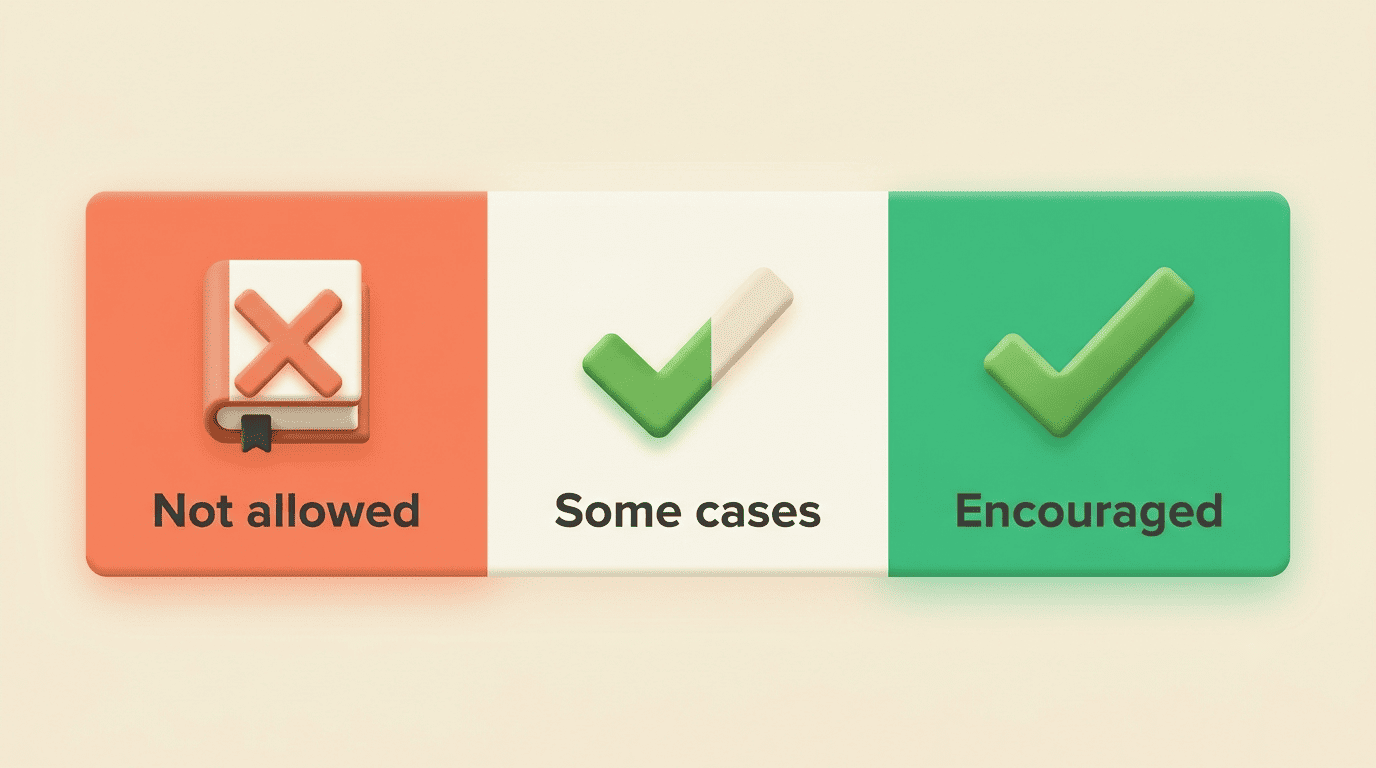
There is no single universal rule, and that is the part students miss most. Carnegie Mellon publishes six sample course policies that range from “students may not use generative AI in any form” to “students are fully encouraged to use generative AI” to “allowed in some cases but not others.” Because expectations for plagiarism and acceptable assistance vary from class to class, the same action can be fine in one course and misconduct in another. When you are unsure, ask the instructor before you use the tool, not after.
When You Must Disclose and Cite AI
Permission to use AI is not the end of your obligations — transparency usually comes with it.
Disclosure is the default when AI is permitted
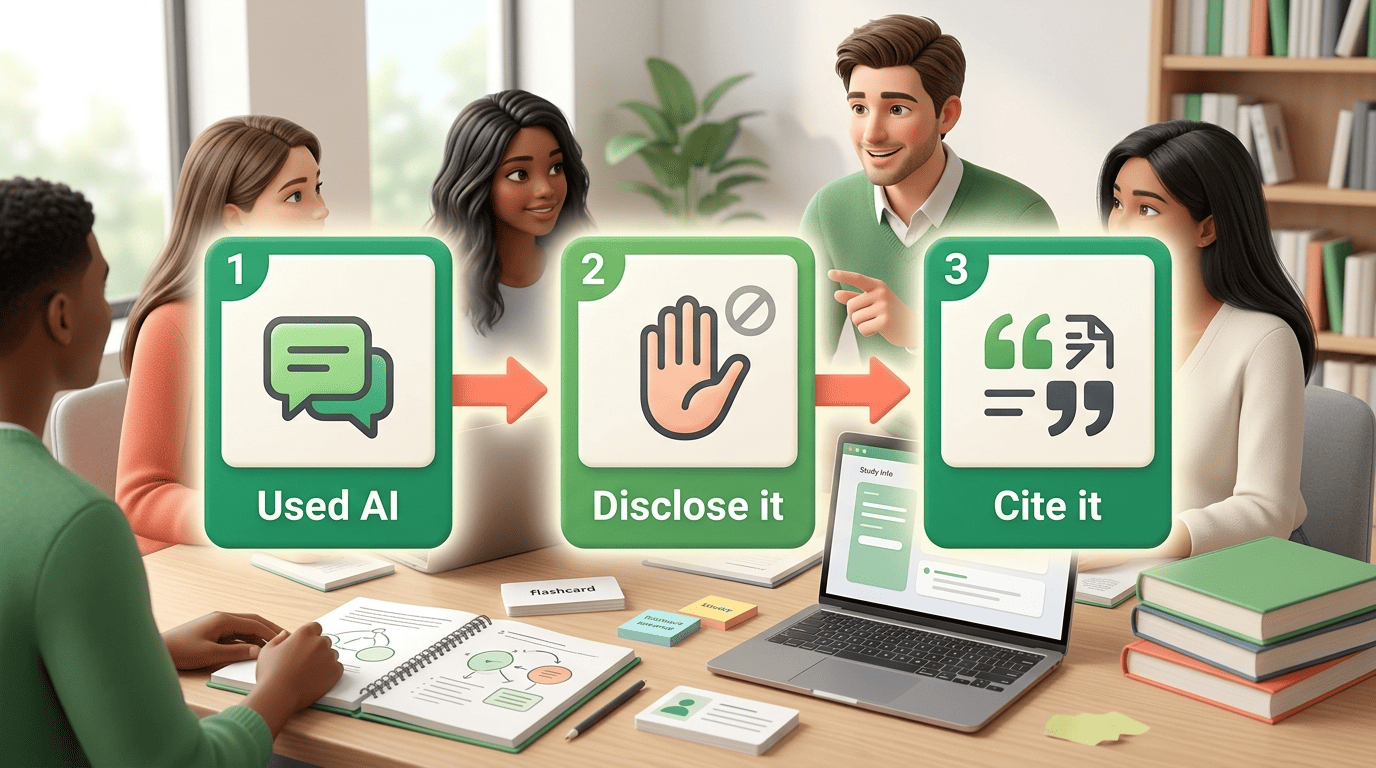
Vanderbilt University permits students to use generative AI but requires them to disclose all such use. The general rule across institutions is the same: even when a tool is allowed, using it silently can still be a violation. State plainly what you used and how you used it.
Silence is risky in the other direction too. If a syllabus says nothing about AI, that is not a green light — it is a reason to ask, because some instructors treat an absence of permission as prohibition.
How to cite AI you used
When you do use permitted AI content, cite it like any other source. The APA, MLA, and Chicago style guides all publish formats for citing AI-generated material. Put verbatim output in quotation marks with attribution, and give a citation even for paraphrased AI content. Crediting the tool is what separates transparent use from passing its work off as your own.
Can AI Detectors Catch You? Why That’s the Wrong Question
Many students frame the whole issue around detection. That framing is both risky and beside the point.
Vanderbilt notes that traditional plagiarism checkers are not reliable for detecting generative AI, and that AI detectors show measurable bias against non-native English speakers — meaning they flag honest work as fake. For that reason, many institutions explicitly warn instructors not to rely on detector scores alone. Chasing the question “will I get caught” assumes integrity is about detection odds, when it is actually about what you did. Do the work honestly and the detector question stops mattering.
How to Study With AI the Right Way
Studying with AI ethically is not complicated once you have a routine. The steps below keep you on the right side of any policy.
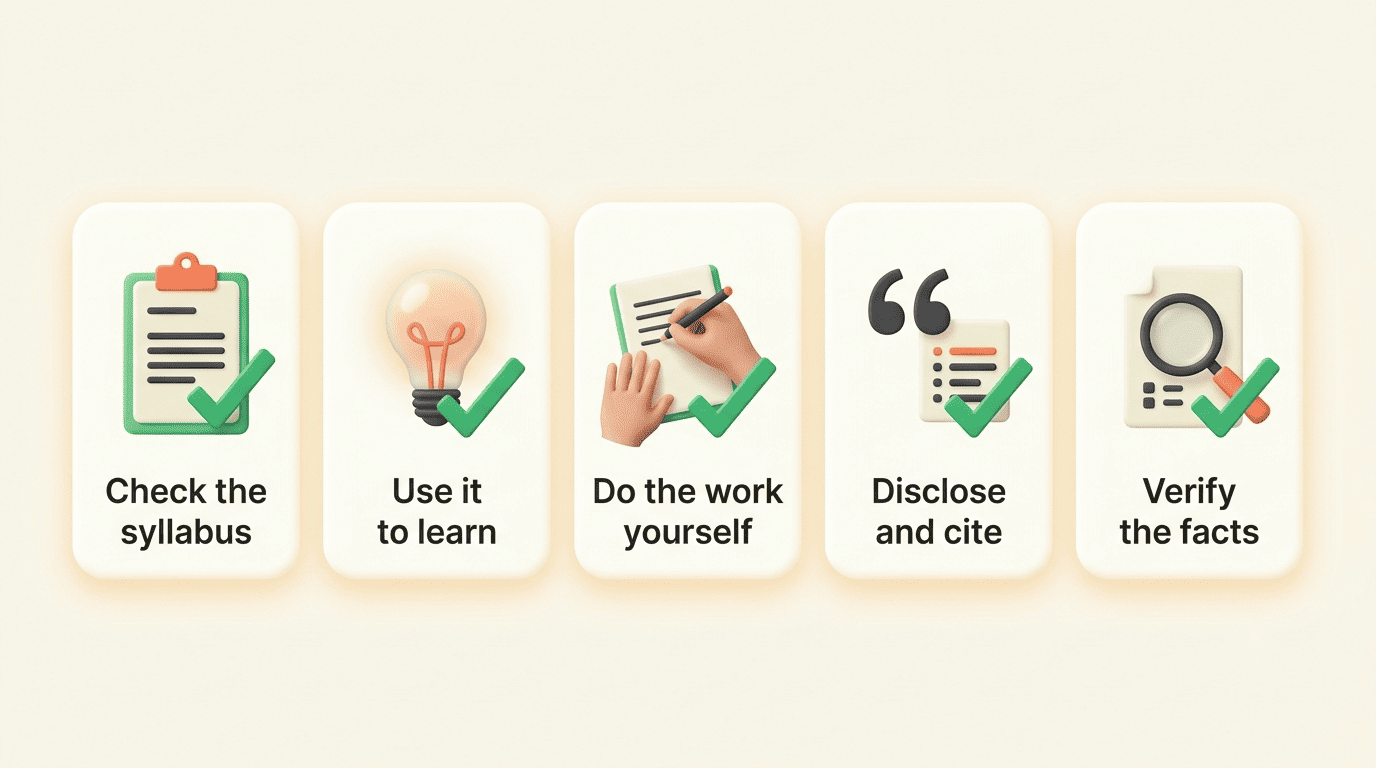
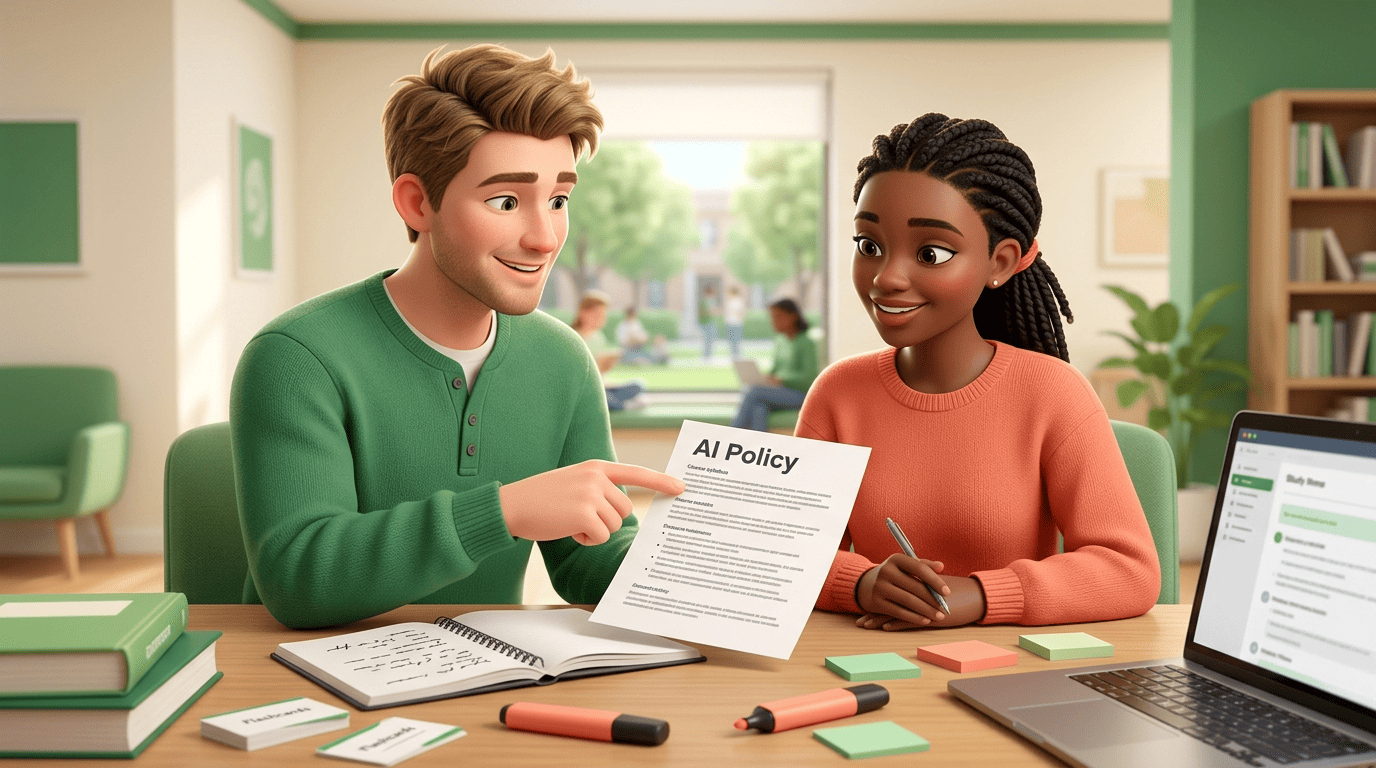
- Check the syllabus for the course AI policy before you use any tool.
- Use an AI study helper to understand, quiz yourself, and get feedback — not to produce graded work.
- Do and write the graded assignment yourself, in your own voice.
- Disclose and cite any AI use that your instructor permits.
- Verify anything the tool tells you against a reliable source.
The principle underneath all five steps is simple: an AI study assistant helps you learn and understand the material — it does not do the work for you, and it is not a tool for cheating. Used that way, AI for studying strengthens your integrity instead of threatening it, because everything you submit is genuinely yours.